
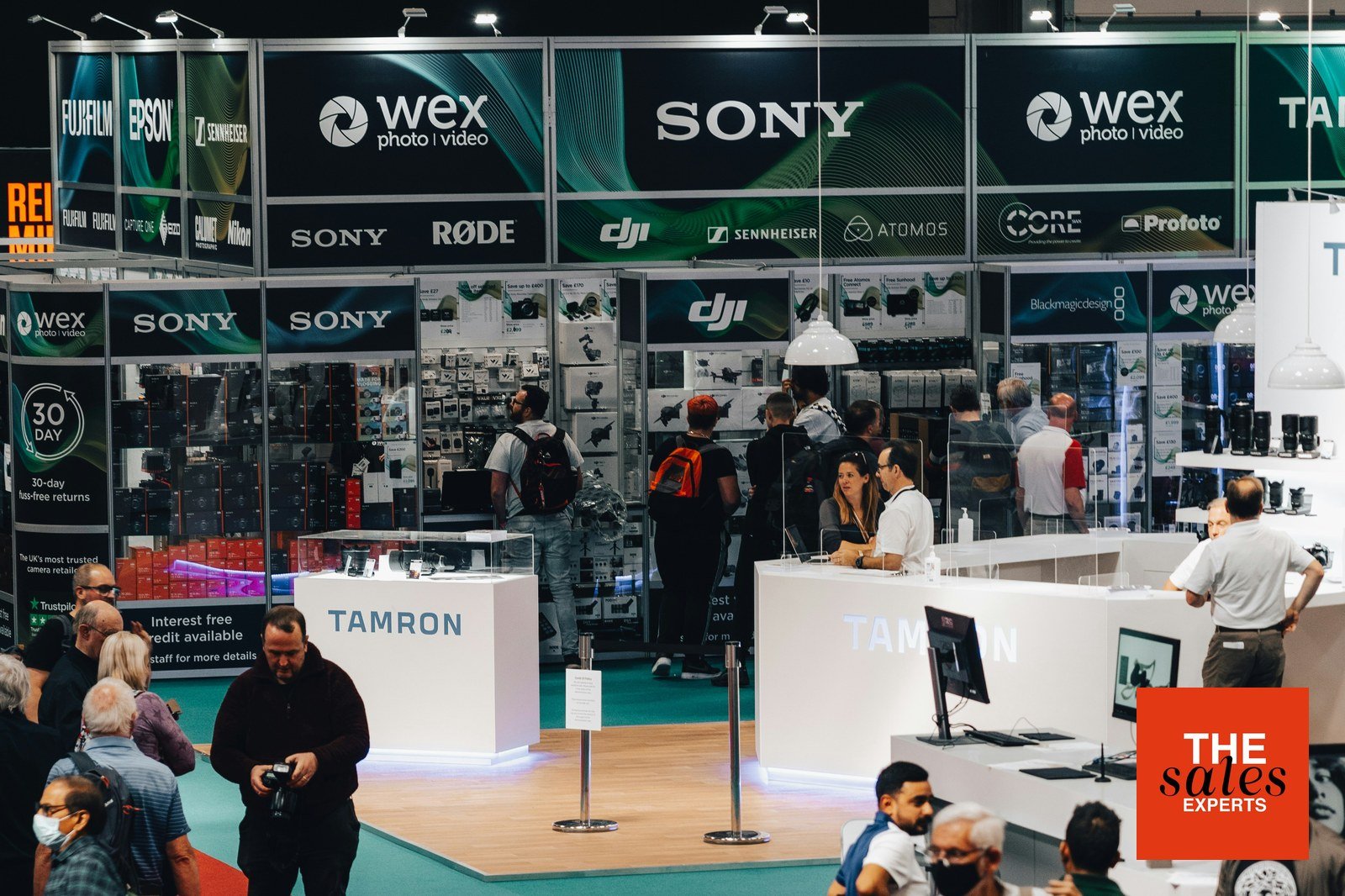
Hiring salespeople for autumn exhibitions should begin four to six months before the first priority event. That gives the business time to recruit, manage notice periods, onboard the new hire and prepare a credible trade-show sales strategy.
But who will turn exhibition conversations into qualified sales opportunities?
Companies often invest heavily in autumn trade shows while postponing the sales hire expected to make the investment commercially successful. They begin recruiting in late summer, assuming the new salesperson can start in September and represent the business immediately.
By then, it may already be too late.
Recruitment takes time. Strong candidates may have notice periods. A new salesperson needs to understand the product, market, customers, competitors and qualification process before speaking for the company. They also need time to identify target accounts, arrange meetings and prepare a structured follow-up plan.
Exhibition performance does not begin when the doors open.
It begins months earlier.
When should you start hiring for the autumn exhibition season?
For most permanent sales appointments, companies should begin planning four to six months before the first priority exhibition.
A practical timeline looks like this:
| Time before the event | Recommended activity |
|---|---|
| 5–6 months | Define the commercial objective, role, compensation and target market |
| 4–5 months | Launch the search, map candidates and begin interviews |
| 3–4 months | Complete assessment, references and offer negotiation |
| 2–3 months | Allow for notice period, preboarding and internal preparation |
| 1–2 months | Product training, account targeting and pre-event outreach |
| Final 2–4 weeks | Confirm meetings, rehearse messaging and finalise lead management |
| Event week | Qualify conversations, capture accurate information and agree next steps |
| First 48 hours after | Prioritise and begin follow-up |
| First 30 days after | Progress opportunities and measure commercial outcomes |
The exact timeline depends on role seniority, sector specialisation, location and candidate notice period. A junior inside salesperson may be hired more quickly than an experienced Specification Sales Manager, Enterprise Account Executive or Sales Director.
The important point is to calculate backwards from the exhibition date—not wait until the event feels close.
Why late sales hiring reduces exhibition return
An exhibition places the salesperson in front of customers, prospects, partners and competitors at the same time. That creates opportunity, but it also increases the cost of poor preparation.
A late hire may arrive without:
- sufficient product knowledge;
- understanding of the target customer;
- confidence discussing technical or commercial questions;
- familiarity with existing accounts;
- knowledge of competitors;
- clear qualification criteria;
- scheduled meetings;
- an agreed follow-up process;
- relationships with the colleagues attending the event.
They may be friendly, professional and energetic—yet still produce little qualified pipeline.
The company then concludes that the exhibition was unsuccessful when the real problem was that no one had enough time to prepare the commercial work around it.
An exhibition stand is not a sales strategy
Booking a stand creates a location. It does not create demand, qualification or conversion.
Exhibitions are most commercially valuable when they support a wider sales plan:
- Identify priority accounts before the event.
- Contact relevant decision-makers.
- Arrange meetings.
- Define the questions the team needs to answer.
- Qualify visitors consistently.
- Record useful information.
- Agree clear next steps.
- Follow up quickly.
- Progress opportunities through the normal sales process.
- Measure revenue and pipeline—not only visitor numbers.
Without these elements, the event can become an expensive brand exercise followed by a spreadsheet of names that nobody acts on.
1. Define what the exhibition must achieve
Before hiring, decide what commercial outcome is expected.
Possible objectives include:
- launching a new product;
- entering a new sector or country;
- generating qualified new-business pipeline;
- meeting named strategic accounts;
- strengthening distributor or partner relationships;
- supporting existing customers;
- arranging demonstrations or site visits;
- identifying market or competitor intelligence;
- recruiting future employees;
- progressing opportunities already in the pipeline.
The objective changes the type of salesperson required.
A technical product launch may need someone who can combine commercial discovery with detailed product understanding. A distributor-focused event may require channel-development experience. An international exhibition may need local language capability and cross-cultural sales experience.
Do not recruit “someone good at exhibitions.” Recruit someone capable of achieving the commercial objective surrounding the exhibition.
2. Decide which sales role you actually need
Different exhibitions and markets require different capabilities.
| Role | Best suited to |
|---|---|
| Sales Development Representative | Initial engagement, qualification and meeting creation |
| Business Development Manager | Proactive new-business conversations and post-event pipeline development |
| Account Executive | Managing qualified opportunities through a defined sales process |
| Specification Sales Manager | Influencing consultants, architects, engineers and project stakeholders |
| Territory Sales Manager | Building relationships and revenue across a defined region |
| Key Account Manager | Developing strategic existing customers and identifying expansion opportunities |
| Channel or Partner Manager | Recruiting and developing distributors, resellers or alliance partners |
| Sales Engineer | Handling technical discovery, demonstrations and solution validation |
| Sales Manager or Director | Leading event strategy, senior meetings and team execution |
One person may combine several responsibilities, particularly in a smaller business. However, the job description should reflect the work required before, during and after the event.
If the long-term need is new-business growth, do not hire a temporary “event personality” who lacks the discipline to build and manage pipeline afterwards.
3. Allow time to reach candidates who are already performing
The strongest salespeople are rarely waiting for an autumn event to create their next opportunity.
They may already be:
- achieving quota;
- managing customer relationships;
- earning commission;
- attending the same exhibitions for a competitor;
- working through a notice period;
- selective about the companies they will represent.
Advertising may generate applicants quickly, but it will not systematically reach high-performing passive candidates.
A targeted search requires time to:
- map direct and adjacent competitors;
- identify relevant salespeople;
- approach them individually;
- explain why the opportunity is worth considering;
- assess performance and market relevance;
- manage interviews and notice considerations.
Starting early gives the business access to the best-qualified market—not simply the people available at short notice.
4. Build notice periods into the plan
Finding the right candidate does not mean they can start immediately.
Depending on the country, role and contract, notice periods may range from several weeks to several months. Senior and specialist salespeople may also have:
- commission awaiting payment;
- customer handover responsibilities;
- garden leave;
- post-termination restrictions;
- annual bonuses or equity milestones;
- pre-booked holidays;
- existing commitments to other exhibitions.
Discuss availability early, but do not make immediate start date the main hiring criterion.
The candidate who can start tomorrow is not automatically a better choice than the candidate who can generate long-term revenue after a reasonable wait.
5. Give the salesperson enough time to learn the proposition
Exhibition conversations move quickly. Buyers ask direct questions and compare suppliers in real time.
A new salesperson should understand:
- product or service capabilities;
- ideal customer profile;
- target sectors;
- customer problems and desired outcomes;
- differentiators;
- pricing and commercial structure;
- implementation or delivery process;
- technical limitations;
- customer evidence;
- common objections;
- competitor positioning;
- when to involve technical or senior colleagues.
Product knowledge alone is not enough. The salesperson must be able to translate features into commercially relevant outcomes for different buyers.
They should also know what not to promise. An enthusiastic but underprepared salesperson can create delivery risk by committing to capabilities, prices or timelines that the business cannot support.
6. Prepare a target-account strategy before the exhibition
The best exhibition conversations are often arranged before anyone arrives.
Build a target list using:
- exhibitor and sponsor information;
- published speaker lists;
- expected delegates where available and lawfully accessible;
- existing CRM data;
- LinkedIn and company research;
- current opportunities;
- lapsed customers;
- partner introductions;
- industry associations;
- geographical or vertical priorities.
Segment accounts into:
- must-meet strategic accounts;
- active opportunities;
- existing customers;
- potential partners;
- priority new prospects;
- market-intelligence conversations.
For each priority account, define:
- relevant stakeholders;
- reason for meeting;
- likely business problem;
- existing relationship;
- desired next step;
- owner before and after the event.
A target-account plan changes the exhibition from passive stand attendance into organised business development.
7. Begin outreach before the event
Waiting for prospects to walk past the stand leaves results to chance.
Pre-event outreach can include:
- personal invitations;
- scheduled demonstrations;
- breakfast or dinner meetings;
- executive introductions;
- content linked to the event theme;
- partner-led introductions;
- existing-customer reviews;
- invitations to launches or presentations;
- follow-up to previous conversations.
The message should explain why the meeting is relevant to that person. “Come and visit us at Stand 42” is less compelling than a specific reason connected to their market, role or current priority.
The salesperson needs enough time to build familiarity through several appropriate touchpoints without overwhelming the prospect.
8. Assess candidates for more than confidence on a stand
Exhibitions favour visible communication skills, but confidence alone does not create revenue.
Assess whether the candidate can:
- start conversations naturally;
- qualify without interrogating;
- identify the relevant buyer;
- explain value clearly and briefly;
- adapt the message to different stakeholders;
- handle objections;
- recognise when a visitor is not qualified;
- capture accurate information;
- agree a specific next step;
- follow up consistently;
- manage opportunities in the CRM;
- convert early interest through a longer sales cycle.
Use a practical assessment:
You are meeting a prospect at an exhibition who has stopped at the stand but has only five minutes. Show how you would open the conversation, understand relevance and agree an appropriate next step.
Then change the scenario:
- the visitor is a technical stakeholder rather than the decision-maker;
- they already use a competitor;
- they want only a brochure;
- they ask for pricing immediately;
- they are interested but have no current project;
- the conversation is with an existing customer.
The aim is not to reward a polished script. It is to evaluate listening, judgement and qualification.
9. Train the whole exhibition team—not only the new salesperson
Sales results are affected by everyone representing the company.
Founders, product specialists, engineers and marketing colleagues may all speak with prospects. Without a shared process, one visitor can receive different messages from different team members.
Before the event, agree:
- core value proposition;
- priority customer profiles;
- key questions;
- competitor positioning;
- what information must be captured;
- lead categories;
- escalation process;
- ownership rules;
- permitted pricing and commitments;
- how next steps are booked;
- who handles each type of follow-up.
Practise handovers between commercial and technical colleagues. The salesperson should know when to bring in expertise and how to remain responsible for the relationship.
10. Create a lead-qualification system before the event
Not every badge scan is a lead.
Create categories based on commercial relevance, such as:
| Category | Meaning | Follow-up |
|---|---|---|
| A: Active opportunity | Relevant problem, buyer involvement and defined timing | Personal follow-up within 24 hours |
| B: Qualified future opportunity | Good fit but later timing or incomplete stakeholder access | Agreed nurture and next review date |
| C: Strategic relationship | Customer, partner, influencer or high-value market contact | Named owner and specific relationship action |
| D: General interest | Limited evidence of need or fit | Appropriate marketing follow-up |
| Not qualified | No relevant need, role or realistic opportunity | No sales pursuit required |
Capture more than contact details:
- reason for interest;
- current situation;
- problem or objective;
- role in the decision;
- timing;
- current supplier or approach;
- promised information;
- agreed next step;
- internal owner.
Useful notes make follow-up personal. A list of names creates administrative work.
11. Plan post-exhibition follow-up before travelling
Many exhibitions fail commercially after the event, not during it.
The team returns to normal work. Notes are incomplete. Leads are uploaded late. Generic emails are sent to everyone. High-potential conversations lose momentum.
Before the event, reserve time in the salesperson's diary for:
- immediate priority follow-up;
- internal opportunity review;
- demonstrations;
- technical meetings;
- proposal preparation;
- CRM updates;
- account planning;
- partner conversations.
A practical follow-up rhythm is:
Within 24–48 hours
- send promised information;
- confirm agreed meetings;
- respond to active requirements;
- connect relevant internal specialists;
- record complete notes.
Within one week
- hold qualification and discovery meetings;
- review all A and B opportunities;
- assign ownership;
- remove duplicates and non-opportunities;
- agree the next commercial stage.
Within 30 days
- measure opportunity progression;
- identify stalled leads;
- analyse common market feedback;
- refine messaging;
- report initial pipeline value.
Fast follow-up is important, but relevance matters more than sending the same email to everyone within an hour.
12. Measure commercial return—not only event activity
Visitor numbers, badge scans and conversations show activity. They do not show return.
Measure:
- target meetings booked before the event;
- target accounts engaged;
- qualified opportunities created;
- pipeline value;
- proposals or demonstrations arranged;
- partner opportunities;
- opportunities progressed from before the event;
- conversion by lead category;
- revenue won;
- average time from exhibition conversation to close;
- cost per qualified opportunity;
- learning that changes the market strategy.
Some enterprise and specification sales opportunities may take months or years to convert. That does not make measurement impossible. Track the progress and influence of the event throughout the sales cycle.
What if you have started hiring too late?
If the autumn event is approaching and the permanent salesperson will not be ready, avoid pretending the timing problem does not exist.
Prioritise the permanent hire
Do not lower the long-term standard simply to place someone on the stand. A poor sales hire costs more than an imperfect exhibition.
Use the existing team deliberately
Select the people best able to represent the business and train them on qualification, messaging and follow-up.
Reduce the event objective
Focus on a smaller number of strategic meetings rather than trying to generate maximum lead volume.
Give the incoming hire preboarding access
Where contractually appropriate and mutually agreed, share product materials, event information and future account priorities before the start date. Do not expect unpaid work.
Arrange post-event introductions
Existing leaders can begin relationships at the event and introduce the new salesperson formally once they join.
Consider appropriate interim support
Temporary event or lead-qualification support may help with logistics and data capture, but it should not be treated as a substitute for the permanent sales capability the business needs.
The objective is to protect both the exhibition investment and the quality of the long-term appointment.
Common exhibition-season hiring mistakes
Beginning the search in late summer
This ignores recruitment time, notice periods and onboarding.
Hiring for personality rather than sales evidence
Energy helps at exhibitions, but performance depends on qualification, commercial judgement and follow-through.
Assuming industry knowledge removes the need for onboarding
A competitor salesperson may know the market but still needs to understand your proposition, delivery and commercial boundaries.
Giving the new hire an unrealistic immediate target
The salesperson cannot create pre-event meetings if they join days before the show.
Treating every conversation as a lead
This inflates the pipeline and overwhelms follow-up.
Failing to define lead ownership
Opportunities stall when sales, marketing, distributors and account managers assume someone else is responsible.
Measuring success at the end of the event
Commercial impact often appears later. Measurement should continue through the sales cycle.
Forgetting existing customers
Exhibitions are not only for new leads. They can strengthen accounts, uncover expansion opportunities and resolve concerns.
Questions to ask when hiring for exhibition-led sales
- Which exhibitions have you attended in this market?
- How did you prepare target accounts before the event?
- How many meetings did you normally schedule in advance?
- How do you start and qualify a short stand conversation?
- What information do you record?
- How do you distinguish interest from a genuine opportunity?
- Give an example of revenue that originated or progressed at an exhibition.
- How did you follow up after the event?
- How do you work with technical or marketing colleagues on the stand?
- How do you handle a prospect who already buys from a competitor?
- What would your 60-day preparation plan look like for our event?
- What would you need from us to represent the business credibly?
Look for specific processes and results. “I am great with people” is not enough.
A six-month exhibition hiring plan
Six months before
- confirm event objectives;
- define the sales role;
- approve salary and OTE;
- select the recruitment approach;
- agree candidate scorecard.
Five months before
- map target candidates;
- begin proactive approach;
- advertise where appropriate;
- start interviews.
Four months before
- complete structured assessment;
- conduct final interviews;
- take references;
- make and negotiate the offer.
Three months before
- manage notice period;
- prepare onboarding;
- confirm exhibition responsibilities;
- organise tools, systems and travel.
Two months before
- begin product and market training;
- build the target-account list;
- agree messaging and qualification;
- start pre-event outreach.
One month before
- confirm meetings;
- rehearse scenarios;
- review existing opportunities;
- finalise CRM and lead ownership;
- protect follow-up time.
This plan should be adjusted to the specific event and candidate market. Starting earlier creates more choice and less pressure.
Final thoughts
The best time to hire for the autumn exhibition season is before the event begins to feel urgent.
Starting four to six months ahead gives the business time to reach proven candidates, complete a proper assessment, manage notice periods and prepare the successful hire to represent the company confidently.
The salesperson then has time to do the work that makes exhibitions commercially valuable: target accounts, arrange meetings, understand customer problems, qualify conversations and build a disciplined follow-up process.
A stand creates visibility.
A prepared salesperson turns that visibility into pipeline.
If your autumn exhibition plan depends on a new sales hire, work backwards from the first event date and begin the search before timing starts to determine quality.
Preparing for the autumn trade-show season? The Sales Experts recruits Business Development Managers, Account Executives, Specification Sales Managers, Territory Managers and commercial leaders across the UK and internationally. Contact us to begin the search before your event calendar begins.